Are you looking for an unforgettable trekking adventure in East Africa?
There are many amazing places you can visit across this continent, but one place that deserves a special mention is the Simien Mountains of Ethiopia.
Famous for giant lobelia plants, cliff-side views, and wild baboon encounters, this mountain range offers world-class hiking experiences like no other.
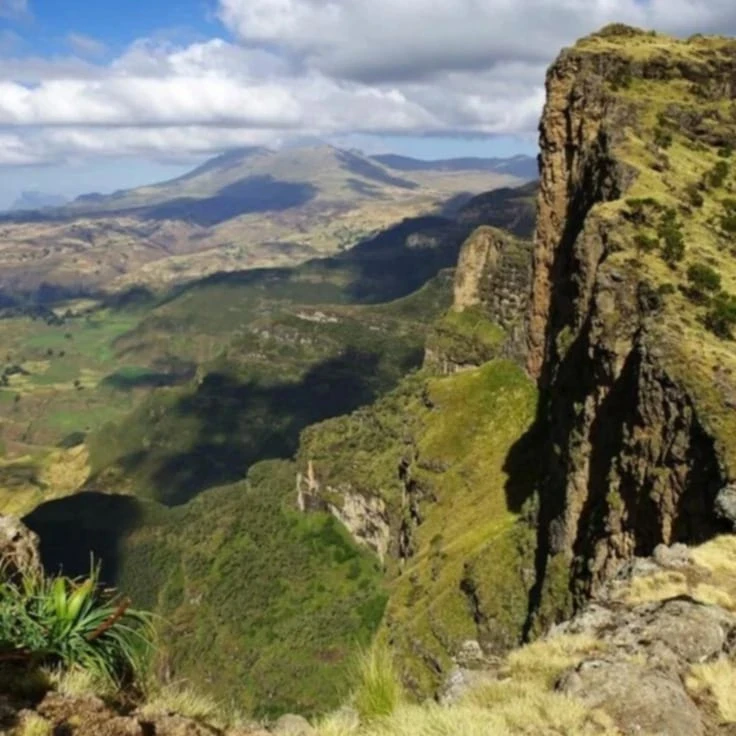
At this place what you will discover is a surprising corner of Africa. Known for its unchanged landscape and its natural beauty. Just past Gondor City the Simien mountains contain the highest peaks in Ethiopia. At the top these reach the height of 14,930 feet. For anyone interested in trekking, mountain biking, photography and the unique species of wildlife including the Waliba Ibex, Ethiopian Wolf, Geleda Baboons and Menileks Bushback this is a once in a lifetime opportunity to vist one of Africas most beautiful destinations.
Ethiopia is known as the roof of Africa and this is right at the top.
About us
At Abyssinia Explorer Tours we currently offer a selection of 9 different tours beginning from 2 days and 1 night to our longest which is 10 days and 9 nights.
Our Simien Mountain Tour Packages
- 1 night 2 days
- 2 night 3 days
- 3 nights and 4 days
- 4 nights and 5 days
- 5 nights and 6 days
- 6 nights and 7 days
- 7 nights and 8 days
- 8 nights and 9 days
- 9 nights and 10 days
About Simien Mountain National Park
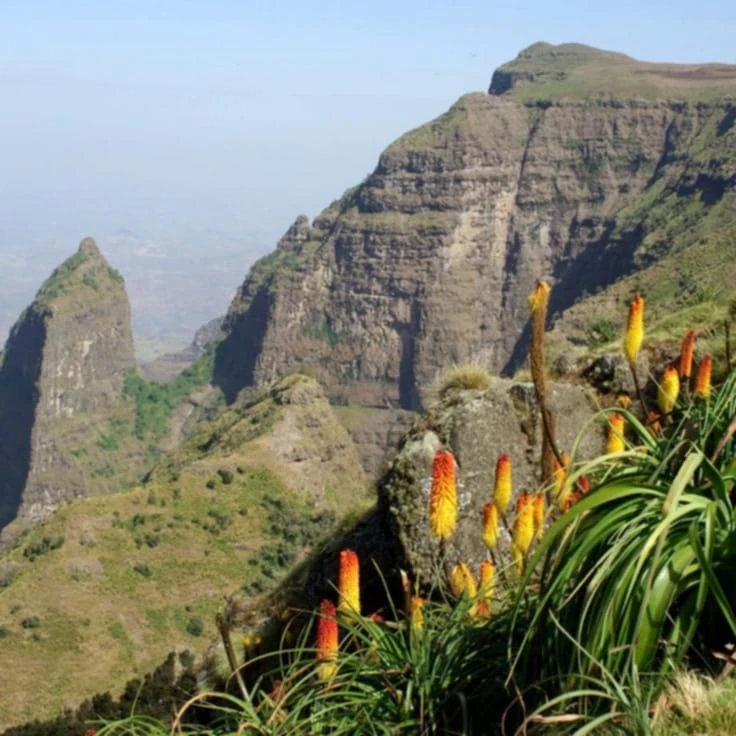
Welcome to Simien Mountain National Park, where Ethiopia reaches the sky.”
Here, travelers experience sweeping escarpments, rare wildlife like gelada baboon groups and the chance to encounter the rare Walia ibex, both unique mega fauna found nowhere else on Earth.
Beyond the views, Simien L offers real connection, hiking trails where mountains stretch endlessly, visiting highland villages, and capturing those changing light views that feel almost unreal.
With Abyssinia Explorer Tour, we make it personal and comfortable, guiding you through the landscapes, the people, and the stories. This is not just sightseeing, it’s experiencing Ethiopia’s highlands in a way you’ll remember long after you leave.
When Is the Best Time To Visit Simien Mountains?
The timing of your trip to the Simien Mountains will dramatically shape your experience, as the landscape shifts between lush, flowering plateaus and dry, clear-sky mountain vistas.
Prime Window (October – November):
This is widely considered the probably the best time to visit. Fresh off the summer rains, the mountain plateaus are covered in vibrant green foliage and blooming wildflowers. Expect warm days hovering around 18°C (64°F), crisp air, low rainfall, and exceptional visibility across deep escarpments at viewpoints like Imet Gogo. Peak Dry Season
(December – March):
These months offer the most stable, reliable weather for multi-day trekking and wildlife viewing.
Days are consistently sunny and warm, though nighttime temperatures at high-altitude campsites (like Sankaber and Chennek) often drop to freezing (0°C to 5°C). Note that as dry conditions persist into February and March, the air becomes hazier and the green vegetation turns golden brown. Shoulder Season
(April – May):
A quiet transition period marked by warmer overall temperatures and increasing afternoon cloud cover. You will encounter far fewer visitors and lower lodge rates, but intermittent showers start to roll in, which can occasionally obscure panoramic views. Heavy Rains
(June – September):
The main wet season brings frequent downpours, muddy trails, and heavy mountain fog. While waterfalls like Jinbar Waterfall are at their most thunderous capacity, dramatic views are often blanketed in thick clouds, and high-altitude trekking becomes significantly more challenging. The Verdict For Scenery and Photography: Aim for October or November to capture the dramatic green landscapes, wildflowers, and clear blue skies.
For Long-Distance Trekking: Book between December and February for dependable, rain-free trail conditions and the best opportunities to spot Walia ibex and Ethiopian wolves along high passes.
Simien Mountains Wildlife Photography
Ethiopia’s Simien Mountains National Park offers one of the most distinctive high-altitude wildlife photography experiences in Africa. Characterized by dramatic basalt escarpments, jagged peaks, and afro-alpine plateaus, the region is home to rare endemic species uniquely adapted to these mountain heights.
Photography Gear & Technical Tips
Lenses:
A versatile dual-body setup works best:
24–70mm / 16–35mm: Excellent for Gelada Baboon troops within environmental landscapes, giant lobelia forests, and dramatic escarpment drop-offs.
100–400mm or 500mm prime: Required for skittish Walia Ibex, distant raptors, and Ethiopian Wolves.
Lighting:
High-altitude mountain sun turns harsh early in the morning. Focus on the golden hours (06:00\text{–}08:00 and 16:30\text{–}18:00), when the light hits the cliff faces and illuminates the thick manes of male Geladas.
Dust & Protection:
The dry season (October\text{–}March) creates fine, blowing dust. Bring rain covers, air blowers, and extra microfiber cloths, plus spare batteries (cold mountain nights drain battery life fast).
What Animals Can You See In The Simien Mountains
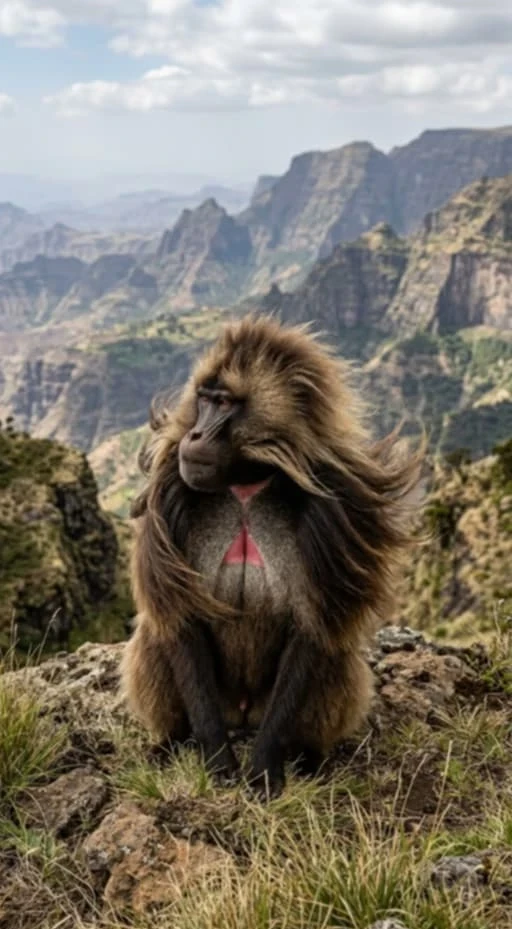
The Simien Mountains harbor an extraordinary concentration of endemic species adapted to its harsh, high-altitude ecosystem.
While the “Big Three” flagship endemics capture most of the attention, the park’s varied habitats—ranging from afro-alpine grasslands to dense slope forests—support over 20 large mammal species and roughly 180 bird species.
Flagship Endemic Mammals
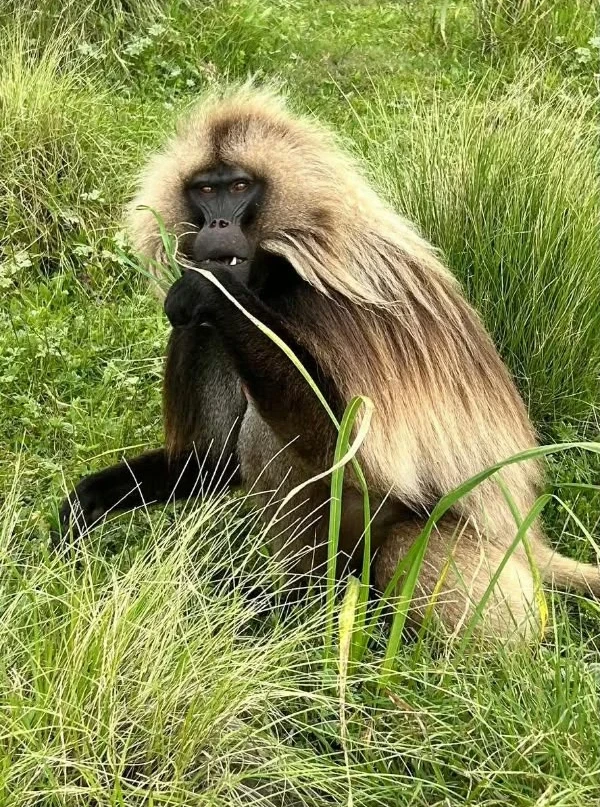
- Gelada Primates (Theropithecus gelada): The undisputed highlight of the range. Known as “bleeding-heart monkeys” for the crimson patch on their chests, they are the world’s only grass-eating primates. They inhabit the plateaus in massive troops (often 100\text{–}400 individuals) and sleep on the sheer cliff faces for safety.
- Walia Ibex (Capra walie): Found exclusively in the Simien Mountains and nowhere else on Earth. These powerful, heavy-horned wild goats navigate steep, rocky cliffs at altitudes up to 4,500\text{ meters}. The primary stronghold for sightings is near the Chennek camp area.
- Ethiopian Wolf (Canis simensis): Africa’s rarest carnivore and the world’s most endangered canid. A small, isolated population roams the afro-alpine moorlands above 3,500\text{ meters}, specialized in hunting high-altitude rodents like the giant mole-rat.
- Menelik’s Bushbuck (Tragelaphus scriptus meneliki): A shy, forest-dwelling subspecies of bushbuck endemic to the Ethiopian Highlands, recognizable by its dark, thick fur adapted to colder altitudes.
Other Notable Wildlife
- Highland Mammals:.
-
- Klipspringer & Common Duiker: Small, sure-footed antelopes commonly seen leaping across rocky slopes and heathlands.
- Rock Hyrax: Small, furry mammals closely related to elephants that inhabit rocky crevices along the escarpments.
- Predators: Spotted hyenas, golden jackals, servals, caracals, and occasional leopards inhabit the lower forested zones and gorges.
-
- Primates: Colobus monkeys, Anubis baboons, and Hamadryas baboons inhabit the lower forested valleys.
-
- Avian Species:.
-
- Bearded Vulture / Lammergeier (Gypaetus barbatus): Huge raptors with 3\text{-meter} wingspans, famous for dropping bones onto rocks from great heights to crack them open for marrow.
-
- Thick-billed Raven (Corvus crassirostris): Endemic to the Horn of Africa, these bold, large-billed ravens frequently scavenge around camps.
- Regional Endemics: Including the Abyssinian catbird, Abyssinian woodpecker, Ankober serin, and Spot-breasted lapwing.
Sustainable Tourism Simien Mountains
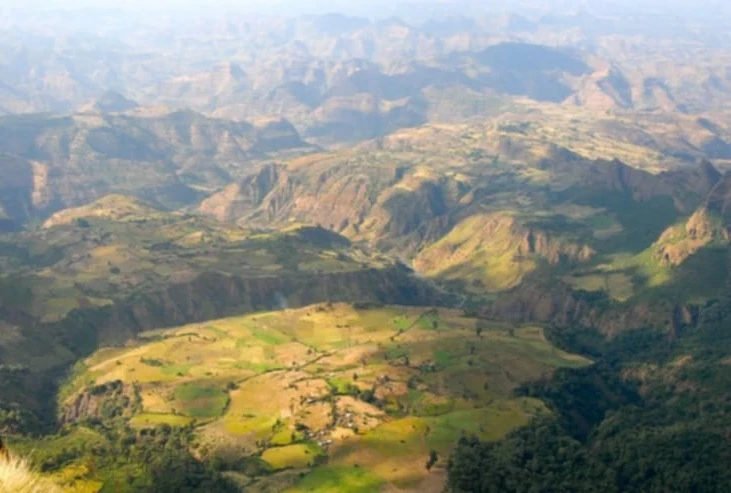
Sustainable tourism in Simien Mountains National Park plays a crucial role in protecting its high-altitude ecosystems while ensuring that tourism revenue directly benefits the local agro-pastoralist communities living along the park’s borders.
Key Conservation & Community Challenges
- Human Encroachment & Grazing Pressure: For decades, intense livestock grazing (mostly sheep and cattle) and agricultural clearing inside or adjacent to park boundaries have degraded native afro-alpine vegetation, shrinking the natural habitat for Walia Ibex and Ethiopian Wolves.
- Relocation & Livelihoods: Conservation initiatives, supported by organizations like the African Wildlife Foundation (AWF), have worked to restore ecosystems while creating alternative income programs (e.g., the Gich community relocation project) to reduce local dependence on park resources.
- Unregulated Development: Infrastructure projects, such as unpaved road networks and unregulated lodge developments, present ongoing challenges to maintaining the site’s UNESCO World Heritage status.
Community-Based Ecotourism Model
The park operates a mandatory local guide, scout, and porter system designed to distribute tourism income directly to nearby villages:
- Local Guides & Scouts: All trekking parties are required to hire certified local guides and armed park scouts from towns like Debark. This creates direct employment and gives communities a vested financial interest in wildlife protection.
- Muleteers & Porters: Support crews for multi-day treks (e.g., from Sankaber to Chennek or Ras Dashen) are hired locally, providing essential seasonal revenue to rural families.
- Eco-Lodge Initiatives: Sustainable accommodation options, such as Limalimo Lodge, prioritize low-impact architecture, renewable energy, waste management, and local hiring practices.
Responsible Travel Practices for Visitors
- Avoid Single-Use Plastics: Carry reusable water bottles with purification systems (filtration bottles or UV purifiers) to prevent plastic waste in remote mountain camps.
- Pack In, Pack Out: Take all non-biodegradable trash back to main hubs or urban centers, as waste processing infrastructure in high-altitude camps is minimal.
- Respect Wildlife Distance: Keep a respectful distance from Gelada troops and refrain from feeding animals to prevent habituation to human food.
- Avoid Handouts: Refrain from handing out money, sweets, or pens directly to children along trekking trails; instead, support organized community, health, or educational projects via accredited NGOs or local schools.
How Difficult Is Hiking In The Simien Mountains?
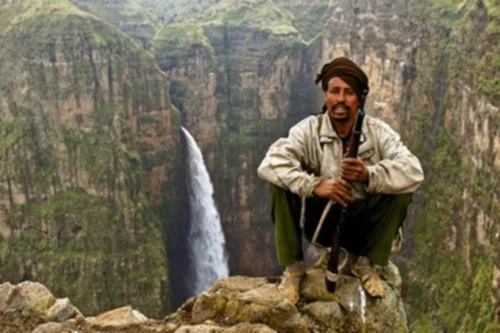
Trekking the Simien Mountains is considered moderate to strenuous, primarily due to the high altitude, steep ascents, and rugged terrain rather than technical climbing skills.
Standard treks require no mountaineering gear, but they do demand good cardiovascular fitness and stamina for sustained daily walking.
Primary Challenge Factors
High Altitude & Thin Air: Altitude is the biggest factor affecting trek difficulty. Base camps start around 3,200 meters (10,500 ft), with popular high points like Chennek resting above 3,600 meters and Mount Ras Dashen reaching 4,533 meters (14,872 ft). Mild altitude symptoms (headaches, shortness of breath, fatigue) are common, making early acclimatization essential.
Terrain & Elevation Profile:
Trails consist of narrow dirt paths, loose gravel, and steep stone stairways along cliff edges. Daily routes frequently feature sharp drop-offs and significant elevation gains and losses as trails drop into deep gorges before climbing back up to high plateaus.
Trail Conditions & Dust:
Dry season paths (October to March) can be exceptionally dusty and dry, while wet season treks (June to September) feature slippery mud, loose rock, and cold rain.
Basic Camping Amenities:
Most multi-day routes rely on established high-altitude campsites (such as Sankaber, Gich, and Chennek) with basic pit latrines and cold water facilities, requiring a comfort level with outdoor backcountry conditions.
Trek Difficulty Breakdown by Route
Sankaber to Chennek (Moderate, 3–4 Days):
The classic, most popular route. Daily walking covers 4–6 hours over rolling afro-alpine plateaus with manageable ascents. Great for getting close to Gelada troops and Walia Ibex without extreme physical exertion.
Chennek to Mount Ras Dashen Summit (Strenuous, 5–7 Days):
A demanding endurance trek. Reaching Ethiopia’s highest peak requires an 11–12 hour round-trip push from base camp, crossing deep river valleys (such as the Mesheha River) and climbing steep, rocky scree slopes above 4,000 meters.
Preparation & Essential Tips
Prioritize Acclimatization:
Spend a night in Gondar (2,130 m) or at a lower lodge before starting multi-day hikes, and maintain a slow, steady pace on the trail.
Use Trekking Poles: Essential for reducing impact on your knees during steep descents down loose gravel paths.
Layering System: Temperatures drop near freezing at high-altitude campsites overnight. Pack thermal base layers, a down jacket, and windproof outer layers.
Logistical Support:
Mandatory local scouts, guides, and optional support teams (muleteers carrying heavy gear) allow trekkers to carry only a light daypack, significantly reducing physical strain on the trail.
Activitities on the Simien Mountains
Avaiable by request. Price not included with tour:
- Horse riding.
- Mountain biking.
- Rock climbing.
- Ethiopian Cooking Classes
- Paragliding.
- Bird Watching
Other Things To Expect From Visiting The Simien Mountains
- Mountain Sunrise and Sunset Viewing
- Star Gazing
- Visiting the local mountain villages
- Meeting the Baboons and other unique Ethiopian wildlife
- Authentic mountain photography opportunities
Booking Your Simien Mountains Experience with Abyssinia Explorer Tours?
If the Simien Mountains sound like something you would like to see please do not hesitate to contact us to arrange one of our many tours
Visit our contact us page here
Also, check our Instagram to find out more about the many experiences that we currently have on offer.