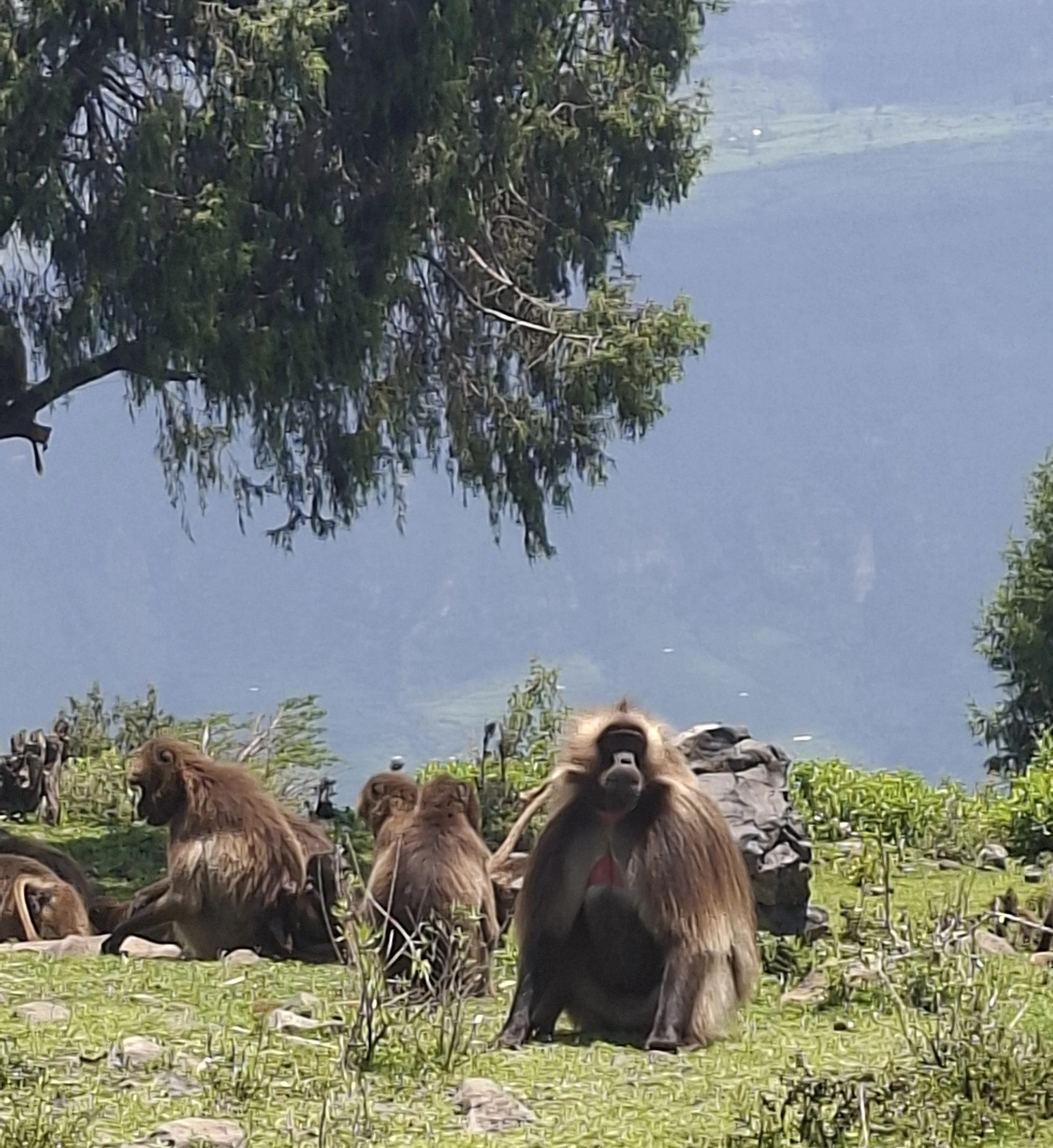
One of Ethiopias most popular and famous tour destinations is without a doubt the Debre Lebanos Monastery. Located in the Oromia region in the North Shewa zone coming here you can expect an unforgettable experience of not only learning about Ethiopas unique ancient version of Christianity but also during your visit you can meet the native Geleda Baboons and get to see the most amazing views of the Ethiopian landscape from the Portuguese bridge Including the Blue Nile Gorge (Gur River) and its waterfalls.

Tour Description
Duration: 1 Day Only
Departure: Addis Ababa
Tour: Private Day Trip
How Much Does This Tour Cost?
Prices begin at $110 per person
*Group discounts are negotiable by request. Contact us through our link here for more Information.
Your Itinerary
07:00 – Departure from Addis Ababa
Your guide and driver will pick you up from your hotel in Addis Ababa in the morning. We leave the city behind and head north toward Debre Libanos, enjoying the changing scenery along the way — rolling hills, eucalyptus trees, farmland, villages, and everyday rural life.
09:30 – Debre Libanos Monastery
Arrive at Debre Libanos and begin your visit to this important Ethiopian Orthodox religious site. Your guide will introduce you to the history of the monastery and the story of Saint Tekle Haymanot, one of Ethiopia’s most respected religious figures.
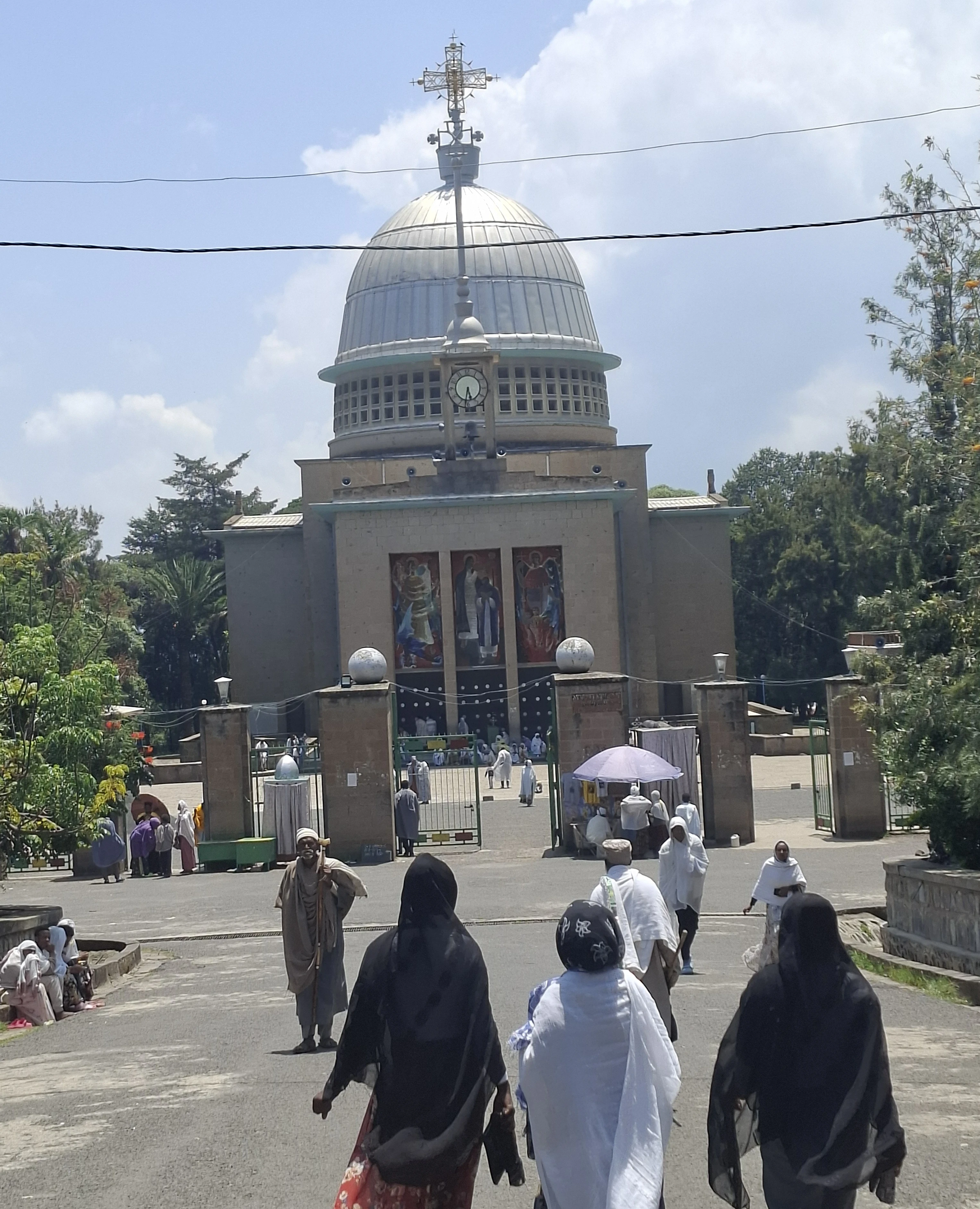
Take your time walking around the monastery, visiting the church, and learning about the traditions and spiritual life that continue here today.
11:00 – Saint Tekle Haymanot Cave
Continue to the area associated with Saint Tekle Haymanot. The peaceful surroundings and mountain scenery make this a wonderful place to slow down and appreciate the spiritual side of Ethiopia.
Your guide will share local stories and explain the importance of the site to Ethiopian Orthodox Christians.
12:00 – Jemma River Gorge
Continue towards the spectacular Jemma River Gorge. Stop at one of the viewpoints to enjoy the dramatic cliffs, deep valley, and wide highland landscape.
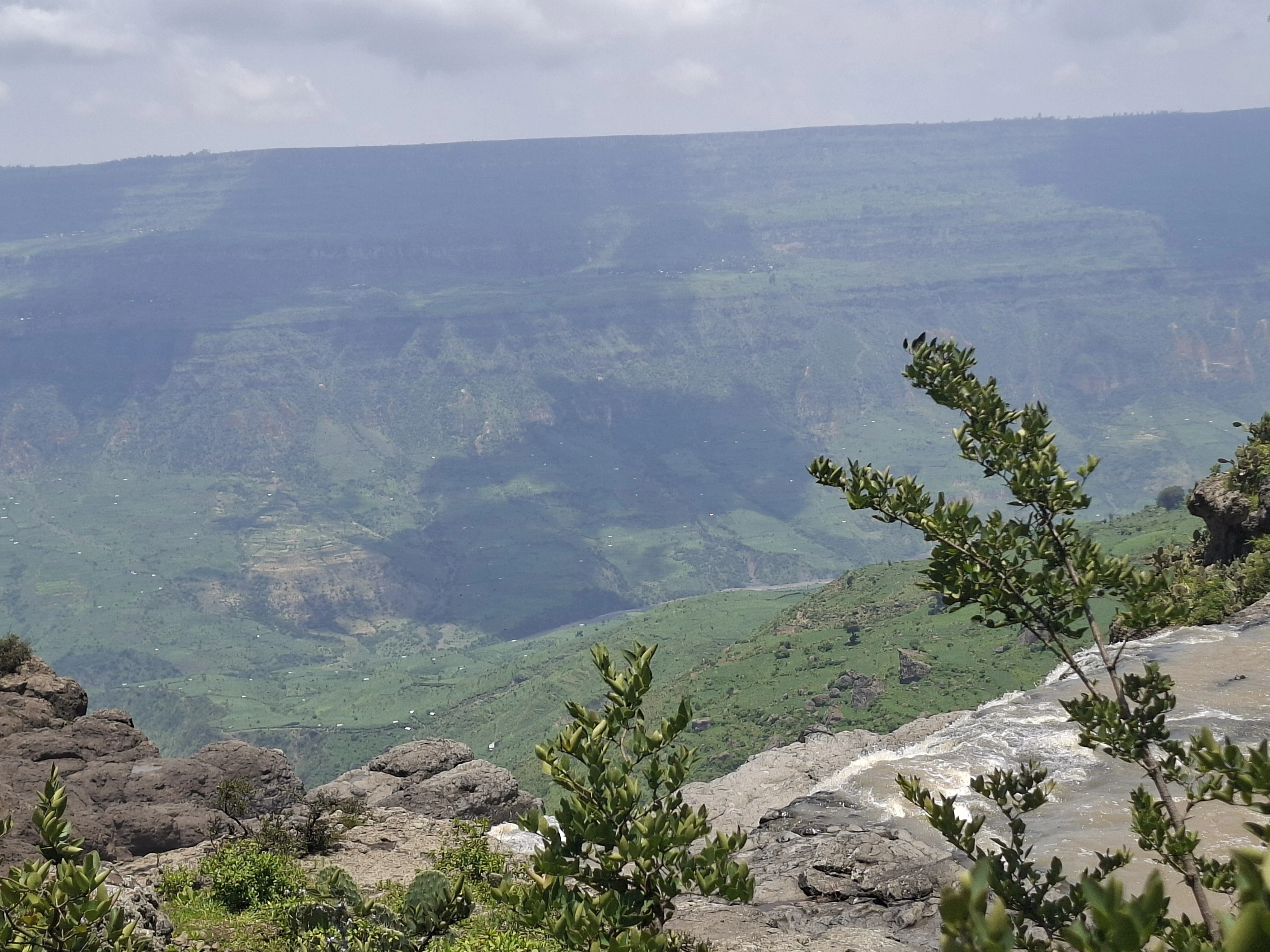
There may also be opportunities to see local wildlife, including Gelada baboons, as well as different species of birds.
13:00 – Traditional Ethiopian Lunch
Enjoy a relaxed lunch at a local restaurant. This is a chance to taste traditional Ethiopian food and take a break before continuing the afternoon’s exploration.
14:00 – Portuguese Bridge
After lunch, visit the historic Portuguese Bridge. Set above the gorge, the bridge is surrounded by beautiful mountain scenery and offers excellent opportunities for photographs.
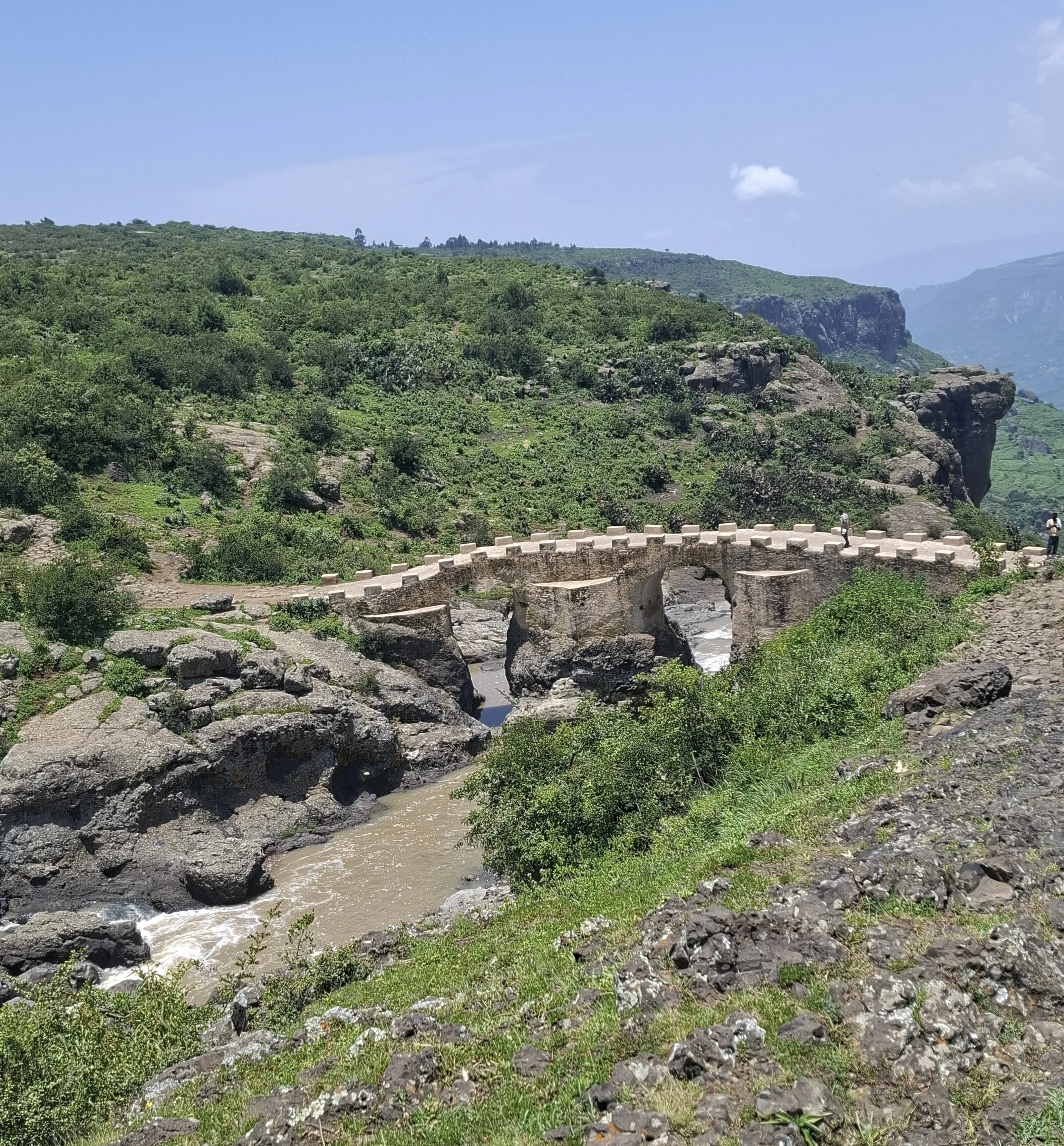
Take a short walk around the area, enjoy the views, and learn about the history and stories connected with this remarkable place.
15:00 – Traditional Ethiopian Coffee Ceremony
Before beginning the journey back to Addis Ababa, stop for a traditional Ethiopian coffee ceremony.
Sit down, relax, and enjoy freshly prepared Ethiopian coffee while experiencing one of the country’s most important traditions of hospitality and social life.
15:45 – Drive Back to Addis Ababa
Begin the return journey, passing through the Ethiopian countryside. If time allows, we can make a few short stops for photographs along the way.
18:00–19:00 – Arrival in Addis Ababa
Arrive back in Addis Ababa and drop you off at your hotel, bringing your Debre Libanos experience to an end.
Experience Highlights
– Visit historic Debre Libanos Monastery
– Learn about Saint Tekle Haymanot and Ethiopian Orthodox traditions
– Enjoy spectacular Jemma River Gorge views
– Visit the historic Portuguese Bridge
– Look for Gelada baboons and local birdlife
– Experience the Ethiopian countryside and rural life
– Enjoy traditional Ethiopian cuisine
– Share an authentic Ethiopian coffee ceremony
– Travel with a local guide who brings the history and stories to life
Other Information
Tour Includes a professional English-speaking guide, a 4-by-4 vehicle with a driver, all entrance fees, lunch, and a traditional Ethiopian coffee ceremony.
What Is The Best Time To Visit Debre Libanos?
The best time to visit Debre Libanos is generally during the dry season, from October to March. During these months, you can expect pleasant temperatures, clear skies, and a low chance of rain. However, the experience varies significantly throughout the year:
October to March (Peak Dry Season):
- This is the high season for tourism. You’ll enjoy the most comfortable weather—typically warm, sunny days and cool nights—which is perfect for exploring the monastery, the 13th-century church, and the adjacent Jemma River Gorge. The air is clear, offering the best conditions for photography and hiking. However, the landscape can become dustier and less vibrant as the dry season progresses.
January (Timkat Festival):
- If you are interested in cultural experiences, mid-January is special because of the Timkat festival (Ethiopian Epiphany). While crowds are larger, visiting during this time allows you to witness the colorful pilgrimage and traditional Orthodox Christian ceremonies.
May to September (Rainy Season):
- The main rainy season (Kiremt) generally runs from June to August. While traveling can be more challenging due to muddy roads, this is when the landscape is verdant, lush, and green. The Blue Nile Falls are at their most powerful, and the entire countryside thrives with wildflower carpets. If you are a wildlife enthusiast looking for sightings (like Gelada baboons), some recommend the green season (either end of the rainy season, such as May or September) when the land is revitalized but before the full logistical disruptions of the peak wet season. Some travelers prefer May to experience the verdant scenery without the intense, non-stop downpours of July and August.
Debre Libanos Cultural Heritage
Debre Libanos is one of Ethiopia’s most significant cultural and religious heritage sites, representing the epicenter of Ethiopian Orthodox monastic life and serving as a crucial depository of medieval history.
Founded in the 13th century, it is not merely an ancient landmark but a vibrant, active center of faith, pilgrimage, and traditional learning that bridges Ethiopia’s legendary past with the present day.
Here is a breakdown of the key cultural heritage aspects of Debre Libanos:
1. The Monastic Order and Historical Power Centre
Founded in 1284 by Saint Tekle Haymanot, one of Ethiopia’s most venerated saints, Debre Libanos established the most influential monastic order within the Ethiopian Orthodox Tewahedo Church.
The Ichege:
For centuries, the abbot of Debre Libanos, known as the Ichege, was the administrative head of the entire Ethiopian Church.
This position was second in spiritual authority only to the Abuna (the patriarch), making Debre Libanos a focal point of both religious and political power within the Ethiopian Empire.
Scholarly Center:
The monastery remains a major institution for church education, famous for preserving traditional theological teaching, liturgical chanting (Zema), and the ancient Ge’ez language.
2. The Cave and Holy Spring of Saint Tekle Haymanot
Located high in the cliffs overlooking the modern monastery complex is the cave of St. Tekle Haymanot, the original site of his devotion. This is one of the most revered pilgrimage sites in Ethiopia.
The Saint’s Legend:
Tradition holds that the saint prayed in this cave for 29 years, eventually standing on one leg until the other fell off. This act of extreme devotion is central to Ethiopian spiritual lore.
Miraculous Water:
A holy spring (Tsebel) flows within the cave, believed by pilgrims to have miraculous healing powers. Pilgrims travel from across the nation to bathe in or drink the water, carrying it home in containers.
3. Religious Architecture and Art
While the original 13th-century structures are long gone—destroyed several times throughout history—the current complex, rebuilt by Emperor Haile Selassie in 1961, stands as a testament to modern Ethiopian religious art.
Haile Selassie’s Church:
The main church, constructed over the saint’s tomb, features stunning domes and intricate mosaics on the exterior front facade.
Stained Glass:
It is famous for its elaborate stained-glass windows, designed by the Hungarian artists E.O. Hevezi and G.J. Bajo, depicting scenes from the life of Christ and St. Tekle Haymanot.
4. The Museum and Relics
The small but rich monastery museum houses a collection of irreplaceable cultural artifacts that survived centuries of warfare and invasion.
Artifacts:
Items on display include ancient gold-embroidered crowns worn by Ethiopian Emperors, silver and gold ecclesiastical crosses from different centuries, centuries-old religious manuscripts (Brana), and robes belonging to former church leaders.
5. Historic Commemoration and Tragedy
Debre Libanos also holds a somber place in Ethiopia’s modern heritage as the site of a brutal 20th-century massacre during the Italian occupation.
1937 Massacre:
In retaliation for an assassination attempt on Italian Governor Rodolfo Graziani, Italian colonial forces massacred an estimated 800 monks, deacons, and lay worshippers in May 1937.
Commemorative Tomb:
A large tomb in the monastery grounds now contains the collected remains of the victims, serving as a site of national remembrance and a memorial to resistance.
6. Pilgrimage and Festivals
The monastery is a living cultural site where ancient traditions are practiced daily.
Major Pilgrimage Day:
While visited year-round, the monastery sees thousands of pilgrims arrive for St. Tekle Haymanot’s Day, held annually on August 30 (or Nehasie 24 in the Ethiopian calendar).
The day is marked by colorful processions, traditional chanting, and feasts.
Timkat (Epiphany):
Mid-January is also a major time for celebration, where the replica of the Ark of the Covenant (Tabot) is carried to the nearby Gur River for baptism ceremonies.
Debre Libanos Photography Spots
Debre Libanos is a visual treasure chest. It offers a unique combination of dramatic landscapes, historic, symbolic architecture, vibrant wildlife, and intimate cultural moments. For a photographer, whether amateur or professional, this region provides diverse challenges and rewards.
From the sheer drop of the Jemma Gorge to the sacred atmosphere of the monastery, here is your guide to capturing the best of Debre Libanos.
1. Landscape & Grandeur: The Jemma River Gorge
This is likely your first major photographic stop, and it’s spectacular. What to Shoot: The Jemma River Gorge is a vast rift valley. The sheer rock cliffs drop nearly 1,000 meters, and on clear days, you can see far across the Ethiopian highlands.
Photography Tips:
Scale:
It’s hard to capture the immense size without a reference. Try to include a person, a distant bird, or even a local shepherd near the edge of the viewpoint.
Time of Day:
Early morning (Golden Hour) provides softer light that accentuates the rock layers and shadows. By midday, the sun is high and flat.
2. Historic Marvels: The Portuguese Bridge
Set above the edge of the gorge near a cascading waterfall (during/after the rains), this 16th-century bridge is a powerful historic subject.
What to Shoot:
The weathered stone of the bridge contrasting with the wildness of the landscape.
Photography Tips:
Leading Lines: Use the curve of the bridge to lead the eye through the frame and toward the cliff edge.
The Waterfall:
If visiting during the green season (May–September), a waterfall often cascades just next to the bridge. A slow shutter speed can blur the water, contrasting nicely with the static stone.
Note: Be very careful near the edges.
3. The Sacred: Debre Libanos Monastery (Church & Museum)
This is a functional spiritual center. Rebuilt in 1961, the church is a blend of modern design and traditional Ethiopian iconography.
What to Shoot:
The imposing church exterior, the detailed front mosaics, and Inside the church where permitted.
The museum does not allow tourists to take photos Inside.
Photography Tips:
Respect is Key:
This is a sacred space. Always ask for permission before photographing people, especially monks, nuns, or priests.
Flash:
Flash is generally not permitted inside the church or the museum. You must rely on natural light and (if allowed) increase your ISO to avoid blur.
4. The Spiritual Ascent: Saint Tekle Haymanot Cave
Perched high on the cliff face, the cave offers unique, atmospheric lighting and context.
What to Shoot:
Pilgrims ascending the path, the entrance to the cave, and the interior, illuminated by small candles or shafts of light from the rock openings.
Photography Tips:
Atmosphere:
The interior is often dark, lit only by candlelight. This requires a fast lens (f/1.8 or f/2.8) and high ISO.
The grainy, low-light aesthetic can perfectly capture the cave’s ancient, spiritual feeling.
5. Wildlife Encounters: The Gelada Baboons
Debre Libanos is one of the easiest places in Ethiopia to see Gelada baboons (also called Bleeding-heart Monkeys). They are accustomed to humans and are often seen near the Portuguese Bridge or the Jemma Gorge viewpoint.
What to Shoot:
The males’ dramatic, lion-like manes, the bright red, hour-glass patch on their chest, and family dynamics (young riding on mothers).
Photography Tips:
Keep Your Distance:
Use a telephoto lens (200mm to 400mm is ideal). Even though they are habituated, approaching too closely will stress them.
Eye Contact:
Focus sharply on their expressive eyes for the most impactful wildlife portrait. The Mane: If backlit, the sun can create a beautiful halo effect through their massive manes.
Visiting Debre Libanos Monastery with Abyssinia Explorer Tours
If Debre Libanos Interests you then we can currently offer a 1 Day tour from Addis Ababa. This is one of many tours we currently offer all across Ethiopia. If you have any questions about this tour or anything else than please do not hesitate to contact us via our page here.
Also follow as on Instagram @abyssiniaexplorertours